I build the systems that run my businesses.
Now I install them in yours.
No theory. No agency pitches. Just battle-tested throughput and flow control for European manufacturers and industrial distributors.
Targeted Interventions.
Systems that stabilize chaos on the factory floor and in the distributor's back office alike.
Material-Yield Reconciliation
Find the steel that disappears between the BOM and the finished cut. I reconcile what each part should weigh against what your nesting and cutting actually consume, so scrap, off-cuts, and yield loss surface in kilograms — and in euros — instead of hiding in the material budget.
SEE THE APPROACH→Throughput Optimization
Remove handoff bottlenecks between planning, floor execution, and quality checks so orders move faster.
VIEW DEMO→Disruption Cost Reduction
Identify recurring interruption patterns and deploy workflow controls that cut avoidable downtime.
VIEW DEMO→Flow Control Systems
Standardize operational decision loops so teams resolve issues quickly and maintain output quality.
VIEW DEMO→Production Scheduling
Optimize production sequences, balance capacity across work centers, and reduce lead times with advanced scheduling logic integrated into your MRP system.
VIEW DEMO→CAD-to-MRP Bridge
Sync bills of materials directly from your CAD system — proven in production with Inventor — into your MRP system, eliminating manual BOM entry errors and engineering-to-production delays.
VIEW DEMO→Distributor Quote-to-Service Flow
For machinery and technical-goods traders: shorten quote-to-cash cycles, keep spare-parts stock aligned with field demand, and dispatch service jobs without losing them in email threads.
VIEW DEMO→
Everything I offer is already running in my own factories
Two companies · 100+ employees · 12 years
I am not an IT consultant pushing generic software. I am an operator. For the past 12 years, I've scaled my own manufacturing companies in Poland by building the exact workflows and control systems I now install for peers across Europe — manufacturers and industrial distributors running order, stock and service flow at scale.
If a process doesn't survive contact with the factory floor, it doesn't get deployed. Period.
The Cost of Friction.
Input your current operational estimates to see the annual impact of unoptimized workflows.
This is cash burning on the factory floor. A standard workflow automation deployment typically recovers 40-60% of this figure within 6 months.
Transparent Models.
Pricing built for serious operators. No hidden agency fees. No SaaS subscription traps.
Diagnostic Audit
Complete analysis of floor workflows and bottleneck identification.
System Blueprint
Technical architecture for custom flow control and automation logic.
Implementation
Deployment, integration, and floor staff training.
Operational Retainer
Ongoing optimization, metric tracking, and priority support.
A typical disruption pattern can leak over EUR 195K annually before process stabilization.
Book a 30-Minute Call →Field Reports.
Part mass in the production record was read from each part's design thickness. When a part was reused on a thicker sheet, its true consumed mass silently diverged from the record — and no identity or quantity check caught it, so material costing and stock inherited the gap.
After every cut, produced parts are linked to the actual sheet, its real thickness is read, and the stored mass is rescaled from the design-thickness basis to the consumed-thickness basis. Planned and reconciled mass are kept side by side, and a mismatch audit flags every part whose design thickness differs from the sheet it was cut on.
Every cut now posts the steel that physically moved, in kilograms, with thickness mismatches flagged for correction instead of absorbed into unexplained variance.

A multi-line operation was losing finished-goods flow each handoff, causing delayed truck departures and recurring overtime.
Built a shift-ready handoff checklist with real-time exception ownership and escalation timers on the production floor.
Recovered EUR 195K annual disruption cost and cut delay incidents by 46% within one quarter.
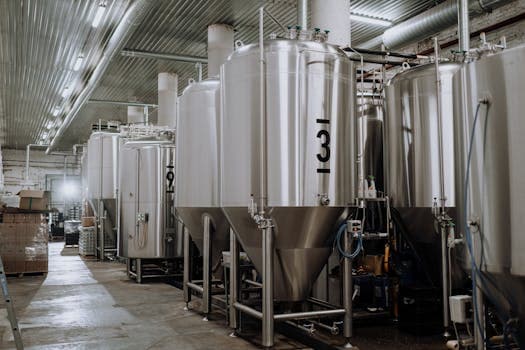
Rework feedback arrived too late to adjust active batches, leading to repeated scrap on similar runs.
Reduced scrap by 31% and improved weekly output by 18% without adding headcount.
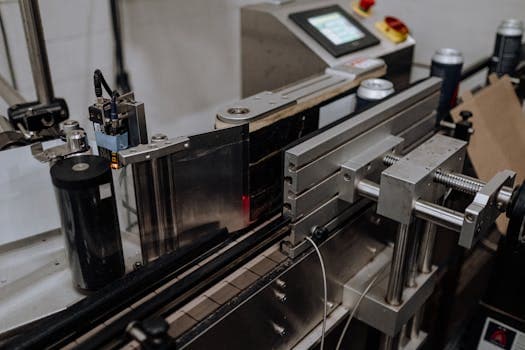
Material release decisions were centralized and delayed starts across multiple cells during demand spikes.
Shortened order start latency by 62% and saved 11 production hours per week.